





News
Everything You Need to Know About Concrete Pump Truck Safety: Operation Guidelines and Inspection Checklist
Jul. 17, 2026
Part 1: Important Safety Precautions During Concrete Pumping Operations
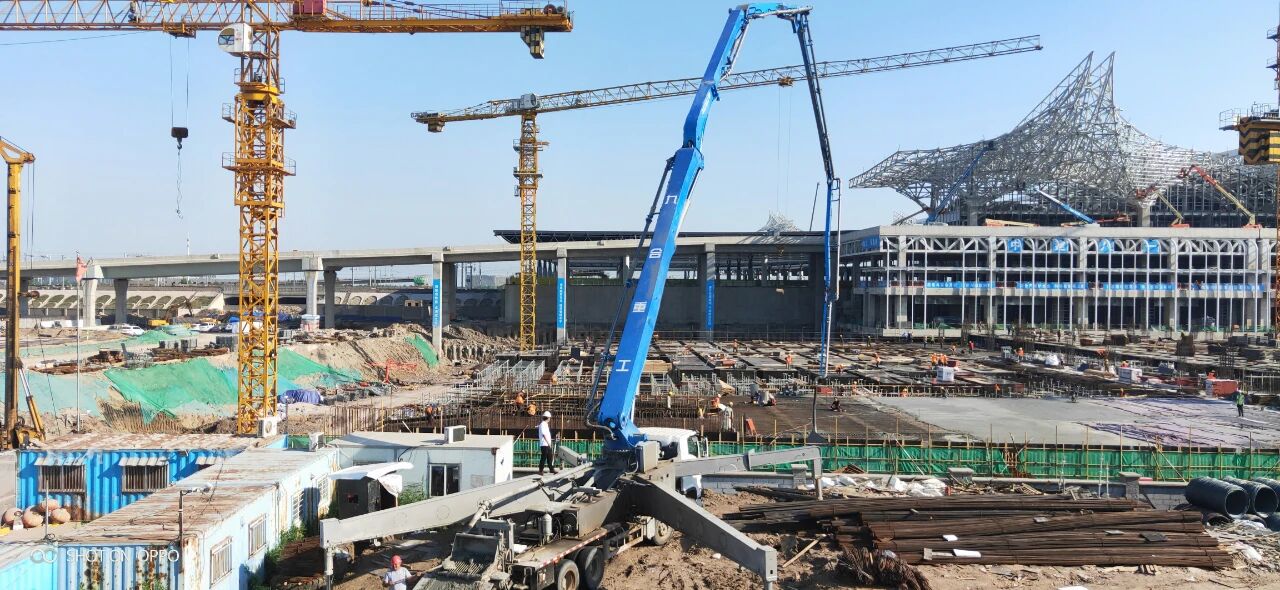
1. Ensure Stable Support Before Pumping
When a concrete pump truck is operating, wooden pads or proper support plates should be placed under the outriggers to improve stability.
Safety requirements:
The pump truck must be positioned on solid and level ground.
The safe distance from an unprotected excavation pit should be at least:
Excavation depth + 1 meter
When extending the placing boom, the distance between the boom tip and high-voltage power cables must be at least 8 meters.
These requirements help prevent overturning and electrical hazards.
2. Do Not Use the Boom as a Lifting Device
When the placing boom extends sideways for concrete distribution, a stability calculation must be performed.
The overturning moment must always be smaller than the anti-overturning moment.
Never use the concrete pump boom for lifting or pulling heavy objects.
The boom is designed only for concrete delivery.
3. Keep the End Hose Away from the Concrete Surface
During concrete pumping, the outlet of the rubber end hose must maintain a safe distance from the pouring surface.
If the hose outlet is buried in concrete:
Internal pressure can suddenly increase.
The pipeline may burst.
Concrete may spray out and injure workers.
Operators must always control the hose position carefully.
4. Avoid Long-Term High-Pressure Operation
A concrete pump truck should avoid operating continuously under extremely high pressure.
After the pump stops and restarts:
Check the pressure gauge.
Confirm the system condition.
Prevent pipeline blockage and pipe bursting.
5. Release Pipeline Pressure Before Disconnecting Pipes
Before removing any concrete delivery pipe connection:
Perform reverse pumping several times.
Release the pressure inside the pipeline.
Confirm that no pressure remains.
Then disconnect the pipe.
Never open a pressurized pipeline, as high-pressure concrete can cause serious injuries.
6. Use Safety Protection During Pipeline Cleaning
When cleaning the concrete delivery pipeline:
Install a safety protection plate at the pipe end.
No person is allowed to stand in front of the pipe outlet.
This prevents injury caused by sudden concrete or cleaning material ejection.
7. Correct Pipeline Cleaning Methods
Pipeline cleaning can be performed by:
High-pressure water cleaning
Compressed air cleaning
However:
Water cleaning and air cleaning must not be used simultaneously.
Do not switch between water and air cleaning during operation.
During the final 10 meters of cleaning, gradually reduce pump pressure or compressor pressure.
This prevents sudden explosions or high-pressure discharge accidents.
Never use compressed air to clean the placing boom pipeline.
Part 2: General Concrete Pump Truck Safety Rules
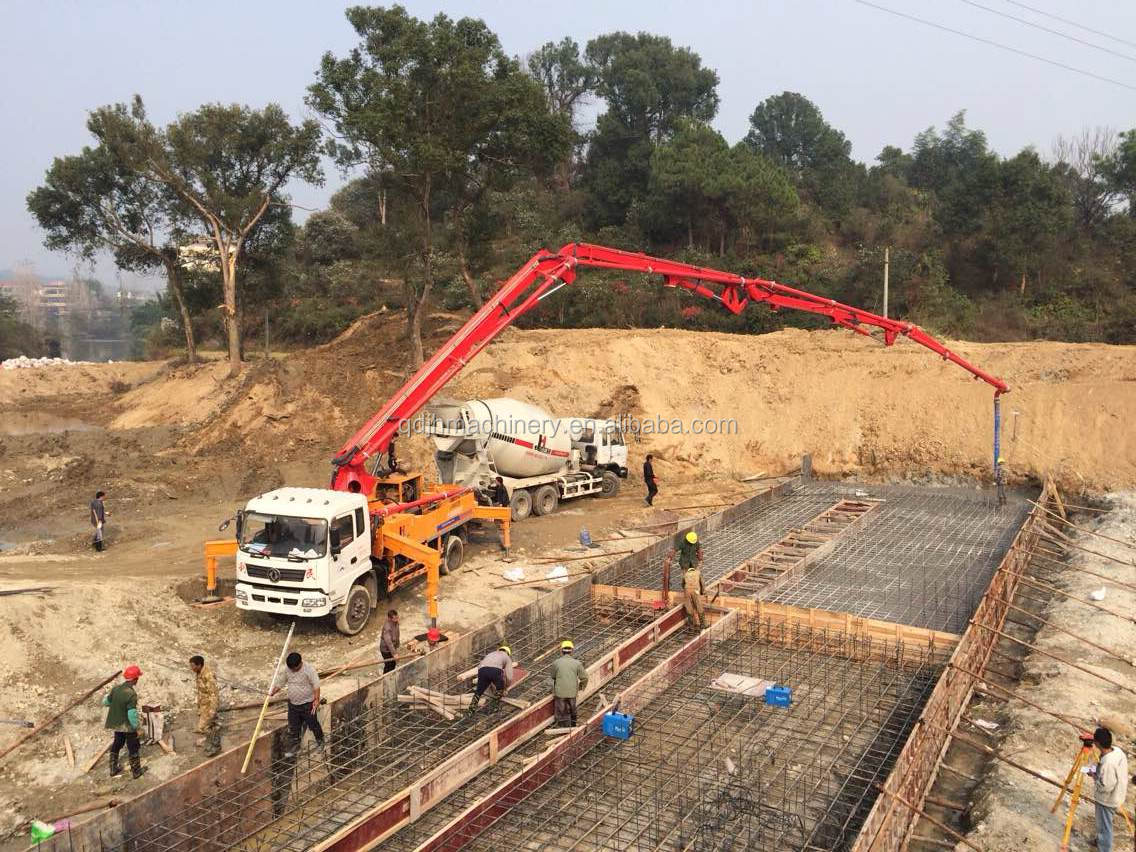
1. Only Pump Suitable Concrete Materials
A concrete pump truck is designed only for transporting concrete.
Never use it to transport other materials.
Improper use may cause:
Pump system damage
Pipeline blockage
Safety accidents
2. Do Not Modify the Pump Truck Without Authorization
The pumping height and delivery distance of a concrete boom pump are carefully calculated and tested by manufacturers.
Operators should never:
Add additional hoses at the end of pipelines without approval.
Modify the pumping system.
Make changes that may affect machine safety.
3. Wear Proper Personal Protective Equipment
Concrete pump operators must protect themselves by wearing:
Safety helmets
Protective shoes
Safety gloves
Other required personal protective equipment (PPE)
Part 3: Safety Requirements During Concrete Pump Truck Operation
1. Ensure Stable Ground Conditions
The supporting ground must be:
Flat and solid.
Strong enough to support the machine load.
The maximum allowable left-right horizontal inclination should generally not exceed 3 degrees.
2. Maintain a Safe Distance Around Outriggers
The pump truck must maintain sufficient safety distance from:
Excavation edges
Slopes
Underground structures
Weak ground areas
3. Follow Correct Boom and Outrigger Sequence
Always remember:
Extend outriggers first, then extend the boom.
Fold the boom first, then retract the outriggers.
Incorrect operation sequence may cause instability.
4. Do Not Operate the Boom in Severe Weather
The boom should not be operated during:
Strong winds
Heavy snow
Ice conditions
Severe weather
Extreme weather can seriously affect pump truck stability.
5. Keep People Away from Dangerous Areas
No one should stand:
Under the placing boom
Near the end hose operating area
Inside unsafe working zones
Always maintain a safe distance during pumping.
6. Correct Use of End Hose
Operators must remember:
Do not place the end hose into concrete.
Do not bend or fold the end hose.
Incorrect hose operation may cause pressure buildup and pipeline failure.
7. Never Touch Moving Parts During Operation
When the pump truck is running:
Do not:
Open the hopper safety grid.
Open the water tank cover.
Put hands into the hopper.
Touch moving components.
If abnormal conditions occur:
Stop the machine immediately.
Inspect the equipment.
Repair the problem before restarting.
Part 4: Concrete Pump Truck Pre-Operation Inspection Checklist
Before starting work, operators should check the following items:
1. Check Fluids and Vehicle Condition
Confirm that:
Fuel is sufficient.
Lubricating oil level is correct.
Hydraulic oil level is sufficient.
Water tank contains enough water.
Tire pressure meets requirements.
Lights and warning indicators work properly.
2. Check Hydraulic and Pump Systems
Ensure:
Hydraulic system operates normally.
Hydraulic pipelines have no leakage.
Cleaning water pump works properly.
Necessary cleaning equipment is available.
3. Check Hopper Safety Equipment
Before pumping:
The mixing hopper must be free of foreign objects.
The protective grid above the hopper must be complete and securely closed.
4. Check Delivery Pipeline Installation
Confirm that:
All delivery pipes are firmly connected.
Pipe joints are properly sealed.
No leakage exists.