





News
Practical Tips for Using a Concrete Pump Truck in Construction
Sep. 21, 2026
Practical Tips for Using a Concrete Pump Truck in Construction
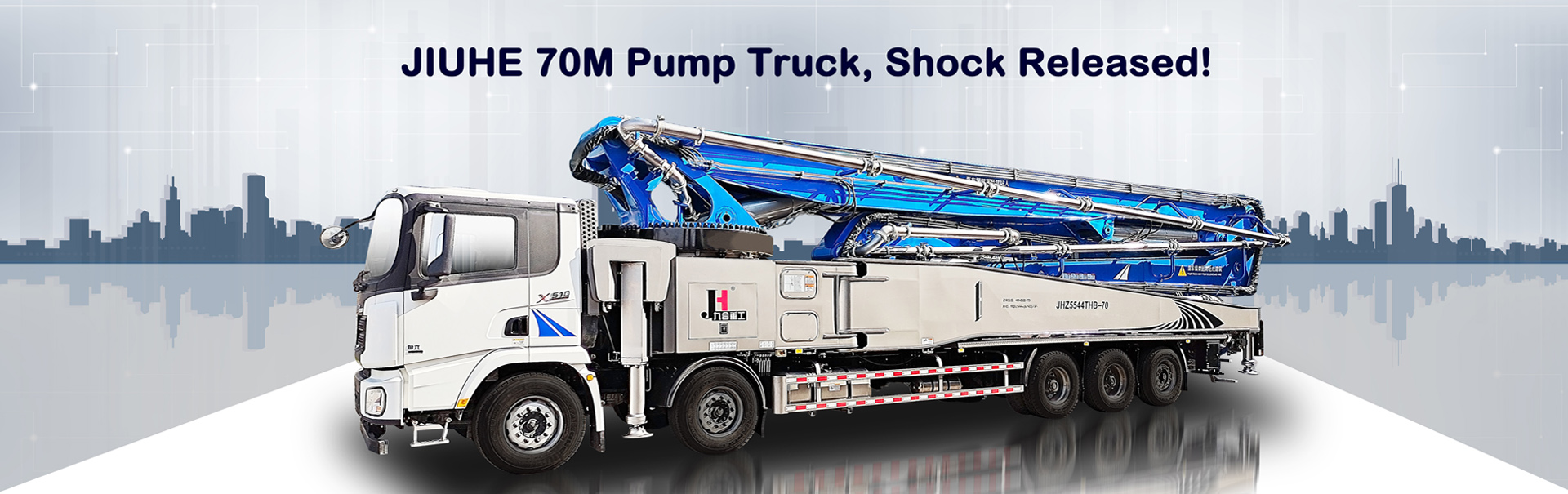
A concrete pump truck is an essential piece of equipment for modern construction projects. It can transport and place concrete quickly and efficiently, significantly improving construction speed and reducing manual labor.
However, the performance of a concrete pump truck depends not only on the equipment itself, but also on proper equipment selection and the quality and mix design of the concrete. Factors such as cement content, aggregate gradation, water-cement ratio, pipeline length, and concrete workability can all affect pumping performance.
This article explains some practical tips for using a concrete pump truck in construction, including concrete pump truck selection and the influence of cement, aggregates, and water-cement ratio on pumpable concrete.
1. Concrete Requirements for Concrete Pump Truck Operations
Selecting the Right Concrete Pump Truck
The selection of a concrete pump truck should be based on several factors, including:
Type and characteristics of the construction project
Required maximum concrete delivery rate
Maximum concrete conveying distance
Planned concrete volume
Type of concrete pump
Construction site conditions
Building structure and height
Construction technology requirements
Surrounding environment and available working space
The performance specifications of concrete pump trucks vary depending on the model. When selecting equipment, the required concrete placement volume should be considered together with the type and structure of the building, site conditions, and construction requirements.
In general, the main performance parameters of the selected concrete pump truck should meet or slightly exceed the actual construction requirements.
If the pump truck has excessive capacity, its utilization rate may be relatively low and operating costs may increase. If its capacity is insufficient, it may not meet the construction requirements and may also lead to excessive equipment wear.
Boom Length and Construction Adaptability
One of the major advantages of a concrete pump truck is its flexibility. As the boom length increases, the maximum placing height and horizontal placing radius generally increase as well, allowing the equipment to adapt to a wider range of construction applications.
For this reason, a concrete pump truck with a sufficiently long boom should be selected according to the requirements of the project.
Concrete pump trucks with boom lengths of approximately 28–36 meters have traditionally been widely used in construction applications. Longer-boom concrete pump trucks can provide greater placing coverage and are suitable for large buildings and projects with demanding concrete placement requirements.
However, extremely long boom systems also have limitations. When the boom length exceeds approximately 42 meters, the cost can increase significantly because of chassis load capacity and structural requirements. In addition, the available working space at the construction site may restrict the use of very long-boom equipment.
Therefore, boom length should be selected according to actual construction requirements rather than simply choosing the longest available model.
How Many Concrete Pump Trucks Are Needed?
The required number of concrete pump trucks should be determined according to:
Total concrete placement volume
Actual pumping capacity of each machine
Required construction time
Concrete supply capacity
Project schedule
For projects involving a very large one-time concrete pour, it is advisable to have a certain amount of backup pumping capacity in addition to the calculated requirement. This can help reduce the risk of construction delays caused by equipment failure or unexpected changes in concrete supply.
For a concrete batching plant with an annual production capacity of approximately 100,000–150,000 m³, two to three concrete pump trucks may be required depending on the actual workload and project conditions.
Product Quality and Equipment Configuration
When purchasing a concrete pump truck, equipment quality should be considered from a long-term operational perspective.
A higher-value concrete pump truck should be supported by correspondingly high standards for its major components, manufacturing quality, reliability, and overall finish.
Since concrete pump trucks generally use hydraulic systems to control pumping and boom movements, the quality and design of the hydraulic system are particularly important. Buyers should consider:
Hydraulic system design
Hydraulic component quality
Pumping system performance
Engine performance
Truck chassis load capacity
Vehicle reliability
Control system configuration
After-sales service
Spare parts availability
The power system is another important consideration. Since the concrete pump and hydraulic system depend on the vehicle engine, the engine's power output and reliability should match the requirements of the pumping system.
The truck chassis must also have sufficient load-bearing capacity to safely support the pumping equipment, boom, hydraulic system, and other components.
Concrete Pump Truck Control Systems
Modern concrete pump trucks can be equipped with different control methods, including:
Manual controls
Wired remote controls
Wireless remote controls
Wired remote controls allow operators to control the machine flexibly from a suitable position. Wireless remote controls provide greater operating freedom and allow the operator to control the boom and pumping system from a distance.
A manual control system can also provide an alternative operating method in certain situations, such as when the remote-control system or electrical system experiences a fault.
Safety and After-Sales Support
A concrete pump truck is a specialized construction vehicle, so safety and reliability should be major considerations when purchasing equipment.
In addition to mechanical performance, buyers should evaluate:
Manufacturer experience
Product quality
Safety systems
After-sales service
Technical support
Spare parts availability
Maintenance convenience
A failure of a concrete pump truck during a major concrete pour can interrupt the entire construction process. Therefore, reliable equipment and timely technical support are important for maintaining project productivity.
2. How Cement, Aggregates, and Water-Cement Ratio Affect Pumpable Concrete
The quality of concrete directly affects the safety, durability, cost, and service performance of a structure. During construction, controlling the factors that influence concrete quality is therefore essential.
For concrete pumping applications, mix design is particularly important because the concrete must have sufficient workability and cohesion to pass through the pump and delivery pipeline without segregation or blockage.
The Role of Cement in Concrete Pumping
During concrete pumping, pressure is transmitted through the liquid phase of the concrete, while the solid particles move together with the cement paste and water.
Cement plays an important role in both binding and lubrication.
If the concrete contains insufficient cement paste, the aggregate particles may not be adequately coated. This can increase friction inside the delivery pipeline and make pumping difficult.
If cement paste leaks out of the concrete mixture or the mix segregates during pumping, pipeline blockage may occur.
Therefore, the cement content and paste volume need to be properly designed according to the aggregate characteristics, pipeline conditions, required strength, and workability.
Cement Type and Pumpability
Different types of cement can have different effects on the pumping characteristics of concrete.
For example, ordinary Portland cement and certain pozzolanic cements may provide good water retention and suitable pumpability when properly proportioned.
Slag cement may have different water-retention characteristics. When used in pumpable concrete, the mix may require adjustments to cementitious material content, sand ratio, supplementary cementitious materials, or admixtures.
Fly ash can also affect concrete workability. Because of its relatively low density and particle characteristics, replacing part of the cement with fly ash can increase the volume of the paste at the same mass of cementitious material. This may improve the flowability of concrete when the mix is properly designed.
However, the concrete mix must still be controlled according to the required strength, setting characteristics, transportation time, and construction conditions.
Avoid Excessive or Insufficient Cement
The cementitious material content should be appropriate.
If the cement content is too low, the cement paste may not completely coat the aggregate particles. This can result in:
Increased pumping resistance
Poor water retention
Bleeding
Segregation
Increased risk of pipeline blockage
On the other hand, excessive cementitious material can increase the viscosity of concrete and may increase pumping resistance. It can also affect construction cost and other concrete properties.
Therefore, simply increasing cement content is not always the best way to improve pumpability. The complete concrete mix design must be considered.
Aggregate Characteristics and Concrete Pumpability
Aggregate selection has a significant influence on the pumping performance of concrete.
For aggregates with the same nominal particle size, rounded gravel generally has a smoother surface and more favorable particle shape than crushed stone. Crushed aggregates tend to have more angular and irregular particles, which can increase internal friction.
The aggregate shape, size, gradation, and void content should therefore be considered when designing pumpable concrete.
Aggregate Gradation
A properly graded aggregate system can reduce the voids between aggregate particles and improve the efficiency of the cement paste.
When the aggregate gradation is continuous and well balanced, the concrete can achieve better:
Pumpability
Cohesion
Workability
Material efficiency
Resistance to segregation
If an important particle-size fraction is missing, the concrete may become difficult to pump and the risk of blockage may increase.
The maximum aggregate size must also be compatible with the concrete pump and delivery pipeline. In traditional applications, maximum aggregate sizes of around 40 mm or less may be used depending on the pump configuration and pipeline diameter, but the actual allowable size should always follow the equipment manufacturer's specifications and the applicable concrete standard.
Fine Aggregate and Sand Ratio
Fine aggregate fills the voids between coarse aggregate particles and helps form the mortar phase that surrounds the coarse aggregate.
During pumping, the mortar helps keep coarse aggregate particles suspended and reduces direct contact between aggregate particles and the inner wall of the delivery pipe.
Natural sand may provide favorable pumpability characteristics because of its particle shape and gradation. Manufactured sand can also be used successfully, but its particle shape, fineness, and gradation should be carefully considered during mix design.
Medium sand is commonly used for pumpable concrete because it can provide a suitable balance between workability and material efficiency.
The amount of fine aggregate should be sufficient to ensure that the mortar can adequately fill the voids between coarse aggregate particles.
Aggregate Size and Pipeline Conditions
The maximum aggregate size is affected by the concrete pump structure and the minimum internal diameter of the delivery pipeline.
As a general principle, the aggregate size should be compatible with the pipeline diameter and pumping system.
In addition to aggregate properties, pipeline conditions also affect pumping resistance.
A longer delivery pipeline generally produces greater frictional resistance. Smaller pipeline diameters can also increase the pressure required to transport concrete.
Therefore, for long-distance concrete pumping, the pipeline configuration, pipe diameter, concrete workability, and mix design should be considered together.
A properly designed cement paste volume can improve lubrication between the concrete and the pipe wall, helping reduce pumping resistance.
3. The Influence of Water-Cement Ratio on Pumpable Concrete
The water-cement ratio (W/C ratio) is one of the most important parameters in concrete mix design.
It affects both the strength and workability of concrete.
A suitable water-cement ratio must provide adequate workability for pumping while maintaining the required concrete strength and durability.
The appropriate water-cement ratio for pumpable concrete depends on several factors, including:
Cement type
Cement fineness
Aggregate characteristics
Aggregate gradation
Fine-to-coarse aggregate ratio
Concrete strength requirements
Chemical admixtures
Transportation time
Required slump or workability
Pumping distance and pipeline configuration
If the water-cement ratio is too low, the concrete may become too stiff and difficult to pump.
If it is too high, concrete strength and durability may be adversely affected, and excessive water can increase the risk of segregation and bleeding.
Therefore, simply adding water at the construction site is not an appropriate solution for improving pumpability.
When additional workability is required, the mix should instead be adjusted through appropriate cementitious materials, water-reducing or other suitable admixtures, and a properly designed aggregate gradation while maintaining the required strength and durability.
4. Key Factors for Successful Concrete Pumping
Good concrete pumping performance depends on the interaction of the pump truck, concrete mix, delivery pipeline, and construction conditions.
Before pumping, the following factors should be checked:
Select a concrete pump truck with suitable boom length and pumping capacity.
Make sure the truck has sufficient load capacity and reliable hydraulic and control systems.
Use a properly designed concrete mix with adequate cohesion and workability.
Maintain suitable cementitious material and mortar content.
Use well-graded aggregates with an appropriate maximum particle size.
Control the water-cement ratio according to strength and workability requirements.
Select a suitable pipeline diameter and configuration for the pumping distance.
Avoid excessive water addition at the construction site.
Prevent segregation and bleeding during transportation and pumping.
Maintain the pumping system and delivery pipeline regularly to reduce the risk of blockage and equipment failure.
Conclusion
The successful application of a concrete pump truck depends on more than the pumping capacity of the machine itself. Equipment selection, concrete mix design, aggregate gradation, cement content, water-cement ratio, pipeline configuration, and construction conditions all influence pumping performance.
Choosing the right concrete pump truck and preparing properly designed pumpable concrete can improve construction efficiency, reduce the risk of pipeline blockage, and help maintain consistent concrete quality.
For contractors, equipment buyers, and construction companies, understanding the relationship between concrete pump truck performance and concrete mix properties is essential for achieving safe, efficient, and reliable concrete placement.