






News
Maintenance, Troubleshooting, and Safety Practices for Crawler Hydraulic Concrete Placing Booms
Dec. 26, 2025
Maintenance and troubleshooting
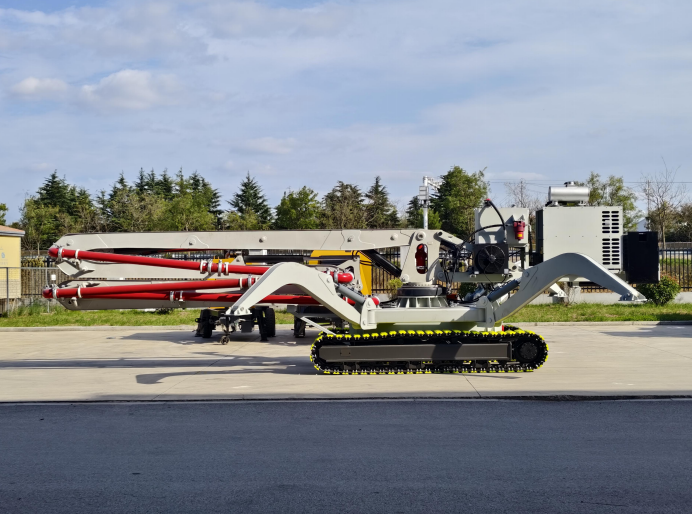
Common issues
You might have some problems when you use a crawler hydraulic concrete placing boom. If you know how to find and fix these problems, your machine will work well.
Check the hydraulic system. Look at the oil level, hoses, and pressure gauges. If oil is low or leaking, the boom can move slowly or jerk.
Look at the boom control valve. Make sure nothing is blocking it and test if it works right.
Check the boom cylinder. Watch for oil leaks and see if the rod or piston is damaged.
Test the electrical systems and sensors. Look at all wires and switches. Make sure the sensors send the right signals.
Check the mechanical parts. Remove anything that blocks movement and put oil on moving parts.
If you cannot fix a problem, read the manual or call a trained technician.
You should also make sure the boom matches the concrete pump’s power. Check welding spots and connections every day. Watch for wear on the concrete output pipe. Always tell someone if you see something strange during work.
Tip: Checking your machine often helps you find small problems before they get worse.
Routine care
Routine care helps your HGL23-4M last for many years. You should follow a simple plan to keep it working well.
Plan regular checks to keep the machine safe and working right.
Put grease on the back of the pump every day.
Look over the whole boom every three months.
Train your workers and maintenance team well.
Follow the maker’s rules for all care steps.
Taking care of your machine stops big problems before they start. Qingdao Jiuhe Heavy Industry Machinery Co., Ltd gives you good help after you buy. You get help fast when you need it, so your machine stays strong.
| Aspect | Description |
|---|---|
| Customer Satisfaction | You get help that fits your needs and answers your questions. |
| Long-term Cooperation | The company wants to work with you for a long time. |
| Comprehensive Service | You get quick help and care from a skilled team. |
Note: Good care and strong support help your crawler hydraulic concrete placing boom last longer and work better.
Safety and best practices

Safety checks
You must follow safety checks every time you use a crawler hydraulic concrete placing boom. These steps help you keep your team safe and protect your equipment. Start with a site survey. Look for overhead electrical hazards like power lines. Always keep a safe distance from these lines. Use warning signs and riggers to guide the boom placement. Train your team to spot electrical dangers. If you cannot keep a safe distance, stop work right away.
Follow these steps before you operate the boom:
Survey the site for overhead power lines and other hazards.
Set up the boom on stable, level ground with strong support.
Keep at least 10 feet away from power lines, or more if the voltage is higher.
Assign a trained person to watch the boom and warn you if you get close to hazards.
Create an exclusion zone around the boom placer to keep others safe.
Use barriers to separate moving parts from workers.
Inspect hoses and pipelines for wear or damage before each use.
Train everyone on emergency response steps.
Tip: Safety checks help you avoid accidents and keep your project running smoothly.
Team communication
Good communication keeps your team safe and helps you work faster. You should talk with your team before you start. Explain the plan and point out any dangers. Use clear signals when you move the boom. Assign roles so everyone knows what to do. If you see a problem, speak up right away.
You can use radios, hand signals, or alarms to share information. Make sure everyone understands the signals. Hold short meetings at the start of each shift. Review safety rules and check that everyone is ready. Encourage your team to ask questions if they are unsure.
| Communication Tool | How It Helps |
|---|---|
| Radios | Quick updates and alerts |
| Hand signals | Clear instructions on site |
| Alarms | Warns of danger instantly |
Note: Strong team communication helps you prevent mistakes and respond quickly to any issues.