






News
Safety Operation Regulations for Concrete Pump Trucks
May. 13, 2026
I. Pre‑operation Preparation of Pump Truck
The operation of the pump truck’s chassis, internal combustion engine, air compressor, water pump, hydraulic devices and other components shall comply with general automobile regulations and relevant provisions for concrete pumps.
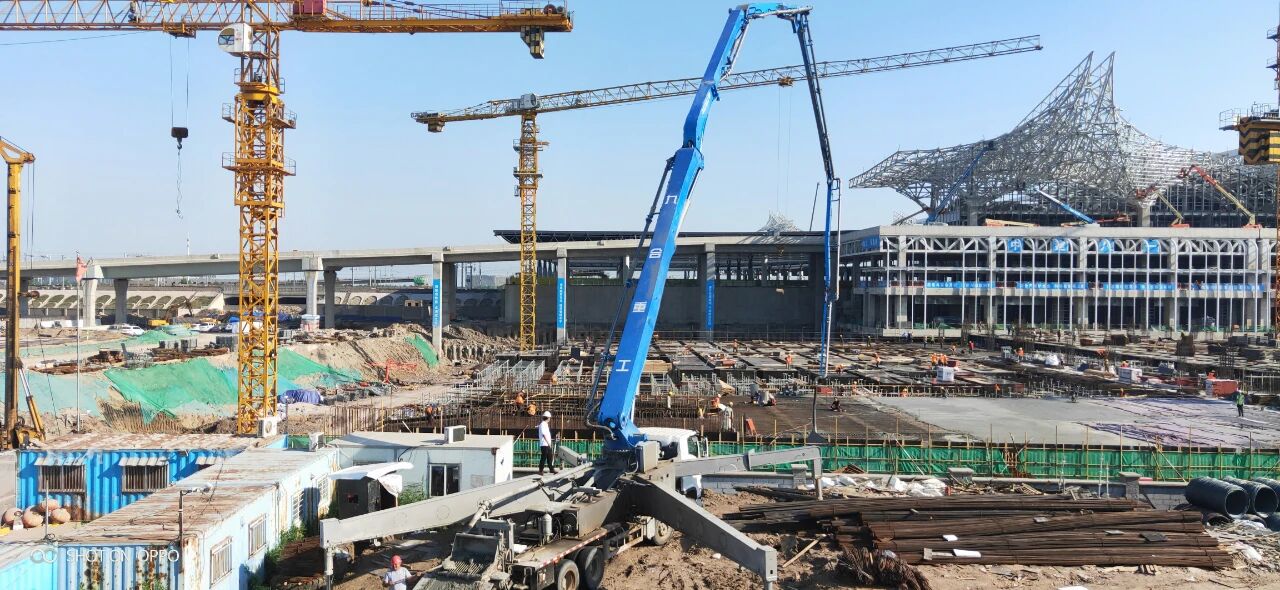
The pump truck shall be positioned on flat and solid ground with no surrounding obstacles and no overhead high‑voltage power lines. Parking on slopes is prohibited.
After positioning, extend the outriggers to keep the truck body horizontal and stable. When feeding concrete via the placing boom, the body inclination shall not exceed 3°.
Turn on the parking lights after positioning to prevent collisions.
II. Inspection Before Pumping Operation
Ensure sufficient fuel, lubricating oil, hydraulic oil and water in the water tank; tire pressure shall meet specified standards; lighting and signal lights shall be complete and functional.
The hydraulic system shall operate normally with no pipeline leakage; the cleaning water pump and auxiliary equipment shall be intact and in good condition.
Remove debris from the mixing hopper; the protective grid on the hopper shall be intact and tightly covered.
Delivery pipelines shall be firmly connected and well sealed.
Pipes and hoses for the placing boom shall be selected in accordance with the manufacturer’s manual. Pipes exceeding the specified diameter are forbidden. Attached hoses shall be fitted with anti‑fall safety belts.
Extend the placing boom strictly in the sequence specified by the manufacturer’s manual. Slewing is only permitted after the boom is lifted off its support. It is strictly forbidden to lift or drag objects with the placing boom.
Do not move the truck body when the placing boom is fully extended. If body movement is required during operation, fold and fix the upper section of the boom, with a moving speed not exceeding 10 km/h.
Do not drag the front hose of the placing boom on the ground. Extending placing pipes or the boom is strictly prohibited. Do not use the placing boom for concrete delivery when wind force reaches Grade 6 or above.
The layout of pumping pipelines shall follow Article 2 of the concrete pump provisions in these regulations.
Before pumping, if the hydraulic oil temperature is lower than 15 °C, increase the oil temperature by prolonging the idling time.
III. During Pumping Operation
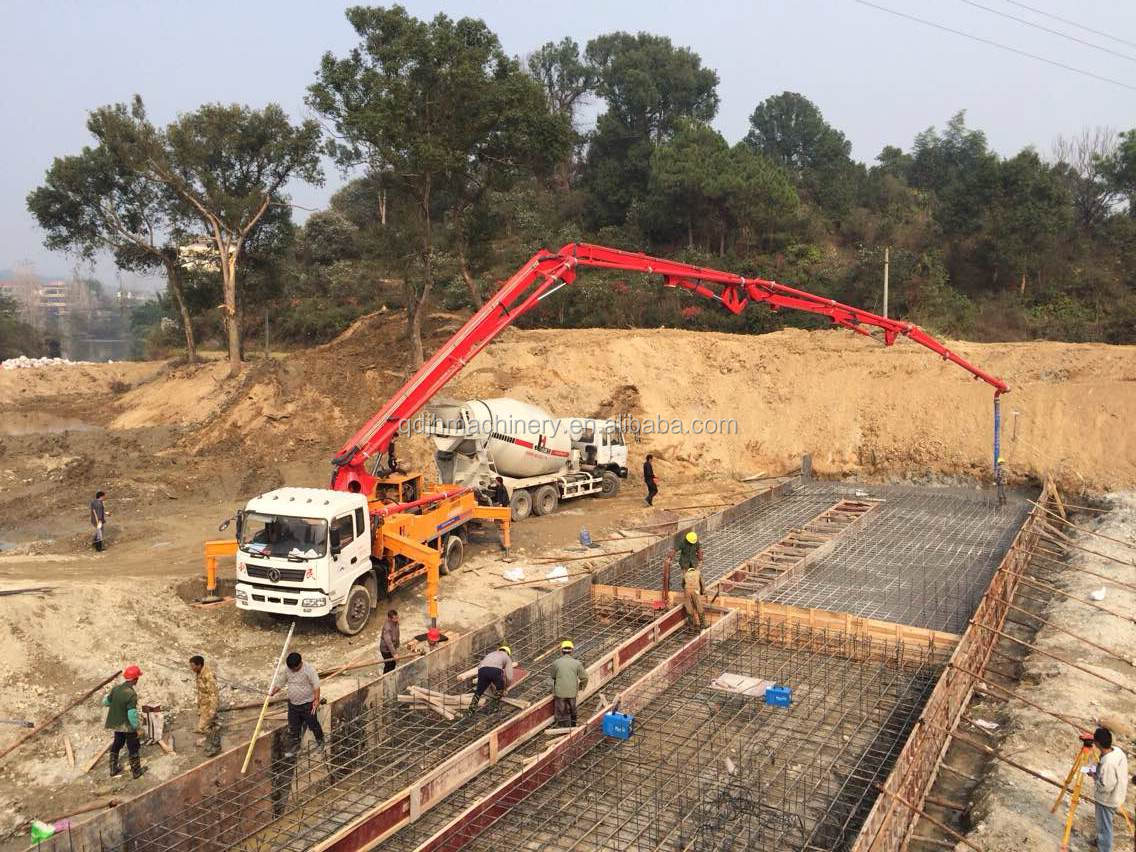
Check the operation of the pump and mixing device during pumping, and monitor all gauges and indicator lights. Stop operation immediately for troubleshooting in case of abnormalities.
The concrete level in the hopper shall be kept above the central axis of the mixing shaft.
Concrete pumping shall be continuous. If operation is suspended due to material supply interruption, follow the requirements of Article 10 of the concrete pump provisions in these regulations.
Do not remove the grid on the hopper during operation; promptly remove unqualified aggregates or debris.
Stop pumping immediately if the pressure gauge rises to the maximum value and abnormal operating sounds occur. Clear pipeline blockages by reverse operation; disassemble and clean the pipes if the method fails.
IV. After Pumping Operation
Discharge all residual concrete from pipelines and the hopper after operation, then clean the hopper and pipelines. When cleaning pipelines with compressed air, no personnel shall stand within 10 m in front of the pipeline outlet.
Do not clean placing boom pipes with compressed air after operation. Fold and retract the placing boom in the specified sequence.
Reset all control switches, adjusting handles, handwheels, control levers, cocks and other components after operation. Unload the hydraulic system, retract outriggers, park the truck in a safe area, and close doors and windows. Drain all residual water in winter.